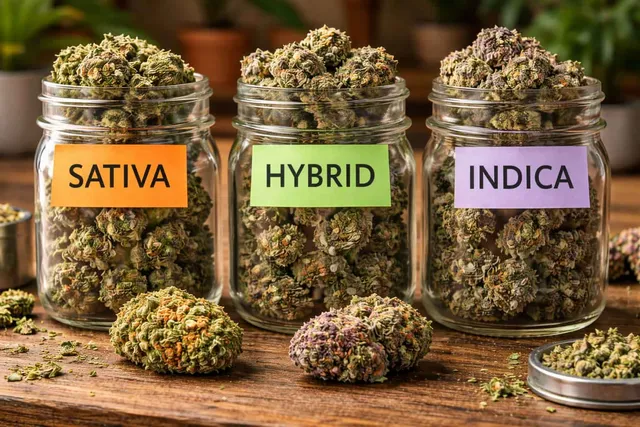
Few terms are more widely recognized in cannabis than indica, sativa, and hybrid. These classifications appear on product packaging, dispensary menus, seed catalogs, and educational resources throughout the industry. For decades, they have served as a convenient way to categorize cannabis varieties and help consumers navigate an increasingly diverse marketplace. Yet as cannabis science continues to evolve, many industry professionals, cultivators, and breeders have begun reexamining what these classifications actually mean and how they relate to modern cannabis genetics.
The Origins Of Indica And Sativa
The terms indica and sativa originated as botanical classifications used to describe different cannabis plant types observed in various regions of the world. Early cannabis researchers identified distinct growth characteristics among plants originating from different climates and geographic locations.
Cannabis sativa varieties were generally associated with taller plants, longer flowering periods, and narrow leaf structures. Cannabis indica varieties were often recognized for their shorter stature, broader leaves, and adaptation to harsher environmental conditions. These physical differences helped cultivators and researchers distinguish between plant populations long before modern breeding techniques existed.
How Cannabis Breeding Changed Everything
Modern cannabis breeding has dramatically transformed the industry. Today’s cannabis market is built on decades of selective breeding, genetic stabilization, and cultivar development. As breeders combined desirable characteristics from multiple genetic lineages, entirely new varieties emerged that no longer fit neatly into traditional indica or sativa categories.
As a result, many products sold today are hybrids containing genetic contributions from multiple breeding lines. These hybrids often combine desirable characteristics from various parent cultivars, creating products with unique cannabinoid profiles, terpene expressions, cultivation traits, and market appeal.
Understanding Hybrid Cannabis
Hybrid cannabis has become the dominant category within today’s cannabis marketplace. Rather than relying exclusively on traditional indica or sativa classifications, breeders now focus on creating cultivars that deliver specific genetic combinations, terpene profiles, cultivation characteristics, and product quality standards.
Hybrid genetics have allowed breeders to develop some of the most recognizable and commercially successful cultivars in the modern era. Many of today’s premium strains are the result of extensive breeding programs designed to maximize quality, consistency, and genetic performance.
The Role Of Genetics In Modern Cannabis
As cannabis cultivation has advanced, genetics have become one of the most important factors influencing product development. Breeders now place significant emphasis on genetic stability, terpene production, cannabinoid composition, disease resistance, cultivation performance, and overall plant quality.
Respected breeding organizations such as Seed Junky Genetics, DNA Genetics, Compound Genetics, Cookies, Humboldt Seed Company, and Green House Seed Co. have helped shape modern cannabis through years of research, selection, and cultivar development. Their work continues to influence many of the premium strains available throughout today’s market.
Why Terpenes Matter More Than Labels
As scientific understanding of cannabis expands, many industry professionals have shifted their focus from simple indica, sativa, and hybrid classifications toward more detailed evaluations of cannabinoid and terpene profiles.
Terpenes such as myrcene, limonene, caryophyllene, pinene, and linalool contribute to the unique characteristics associated with individual cultivars. Because modern hybrids often contain diverse genetic backgrounds, terpene profiles frequently provide more meaningful information about a strain than traditional classifications alone.
This shift has encouraged both consumers and industry professionals to evaluate cannabis through a more sophisticated lens, focusing on chemical composition rather than broad botanical categories.
The Most Influential Modern Strains
Many of today’s most celebrated cannabis cultivars are hybrids developed through advanced breeding programs. Varieties such as Gelato, Runtz, Zkittlez, Wedding Cake, Permanent Marker, Jealousy, Biscotti, RS11, Blue Lobster, and Super Boof have gained recognition for their genetics, terpene profiles, and influence on modern cannabis breeding.
These strains illustrate how far the industry has evolved beyond traditional classifications and demonstrate the importance of genetic innovation in shaping today’s cannabis landscape.
The Future Of Cannabis Classification
The cannabis industry continues to move toward a deeper understanding of genetics, cannabinoids, terpenes, and cultivation science. While indica, sativa, and hybrid remain useful terms for consumer education and product organization, modern cannabis is increasingly defined by its genetic complexity and chemical composition rather than simple classifications.
As breeding programs continue to advance and scientific research expands, future cannabis classification systems may place greater emphasis on measurable characteristics such as cannabinoid content, terpene expression, genetic lineage, and cultivation performance. Understanding this evolution helps consumers better appreciate the complexity, innovation, and craftsmanship behind today’s cannabis products.