
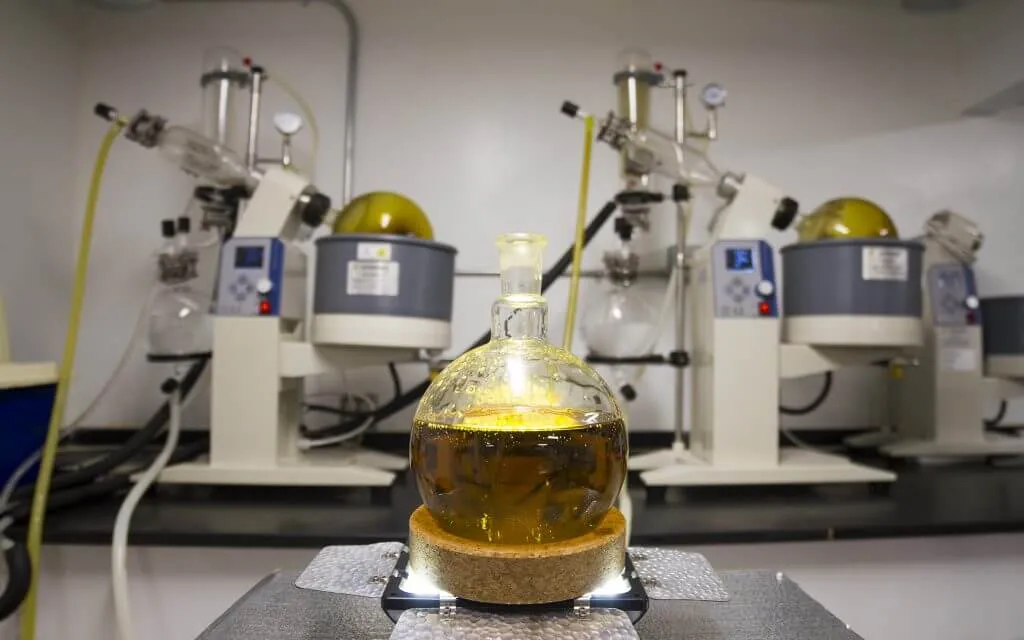
The modern THC industry is built upon far more than cultivation alone. While high-quality cannabis genetics and advanced growing techniques remain essential, it is extraction, refinement, and manufacturing technology that transformed THC into the foundation of a sophisticated global marketplace. Every concentrate, edible, beverage, vaporizer formulation, and advanced cannabis product begins with a series of carefully controlled production processes designed to isolate, refine, and formulate cannabinoids with exceptional precision. These technologies have allowed the industry to evolve from traditional agricultural production into a highly specialized manufacturing sector capable of supporting innovation on a massive scale.
The rapid expansion of THC product categories would not have been possible without advances in extraction science and production engineering. As consumer demand diversified, manufacturers needed reliable methods for producing consistent ingredients suitable for large-scale formulation. This challenge encouraged substantial investment in processing infrastructure, quality control systems, laboratory analysis, and manufacturing innovation. The result is an industry where science and engineering play an increasingly important role in determining product quality, consistency, and commercial success.
Extraction Created The Modern THC Marketplace
Extraction represents one of the most important technological breakthroughs in the evolution of the cannabis industry. Before extraction technologies became widely adopted, cannabis products were largely limited to traditional flower formats. The ability to isolate cannabinoids from plant material fundamentally changed the industry’s trajectory by creating opportunities for entirely new product categories and manufacturing approaches.
Modern extraction processes allow manufacturers to separate valuable compounds from raw cannabis biomass while preserving desired characteristics and improving production efficiency. This capability transformed THC into a versatile ingredient suitable for numerous applications across the consumer marketplace. Extraction effectively bridged the gap between agriculture and advanced manufacturing, enabling the development of products that would have been impossible using traditional production methods alone.
Precision Processing Drives Product Consistency
One of the greatest challenges facing any large-scale consumer products industry is consistency. Consumers expect products to perform reliably regardless of when or where they are purchased. Achieving this level of consistency requires extensive process control throughout manufacturing operations. Modern THC production facilities rely on carefully monitored systems designed to maintain uniformity across every stage of production.
Precision processing allows manufacturers to standardize ingredients, improve efficiency, and reduce variability. These capabilities are especially important in a market where product quality and consumer trust play critical roles in long-term business success. As the industry matures, precision manufacturing continues becoming a defining characteristic of leading production facilities.
Refinement Elevated Product Sophistication
Extraction is only the beginning of the manufacturing journey. Once cannabinoids are separated from plant material, additional refinement procedures are often required to improve purity, consistency, and formulation flexibility. Advanced refinement systems help manufacturers create ingredients that meet specific production objectives while supporting increasingly sophisticated product development strategies.
Refinement has played a major role in expanding the diversity of THC products available today. By creating highly controlled ingredients suitable for various formulations, manufacturers gained the flexibility necessary to explore new categories and delivery systems. This process continues driving innovation throughout the industry as businesses seek opportunities to improve product quality and expand market offerings.
Formulation Science Shapes Modern Products
The success of today’s THC marketplace depends heavily on formulation science. Manufacturers no longer focus solely on producing cannabinoids. They also work to create products that deliver consistency, convenience, stability, and premium consumer experiences. This requires expertise in ingredient integration, product design, manufacturing processes, and quality assurance.
Formulation science has become one of the industry’s most important competitive advantages. Businesses invest heavily in research and development to create products that stand apart in crowded markets. The ability to combine scientific knowledge with consumer insights has helped drive the emergence of increasingly sophisticated product categories and manufacturing approaches.
Quality Control Is At The Center Of Production
As THC manufacturing expanded, quality control became a central pillar of industry operations. Modern facilities implement extensive monitoring systems designed to verify ingredient consistency, production accuracy, and manufacturing performance. Laboratory analysis, process validation, operational oversight, and documentation procedures all contribute to maintaining product integrity throughout production.
The importance of quality control extends beyond regulatory compliance. It directly influences consumer confidence and brand reputation. Companies capable of maintaining rigorous production standards are often better positioned to build trust and establish long-term market leadership. Quality assurance remains one of the most important factors shaping the industry’s future.
Automation Is Changing Manufacturing Operations
Like many advanced industries, cannabis manufacturing is increasingly embracing automation. Automated systems can improve efficiency, enhance consistency, and support large-scale production while reducing operational variability. From environmental monitoring and ingredient handling to packaging and production management, automation is becoming a valuable tool for modern manufacturers.
The integration of automation reflects the industry’s broader movement toward operational excellence. Companies are continually seeking ways to improve productivity while maintaining quality standards. As manufacturing technologies continue advancing, automation is expected to play an even larger role in shaping future production environments.
Manufacturing Innovation Will Define The Next Decade
The future of THC manufacturing will likely be shaped by continuous innovation. Advances in extraction efficiency, formulation science, automation, analytical testing, and production technologies are creating opportunities that extend far beyond today’s capabilities. Manufacturers that embrace these developments will be better positioned to compete in increasingly sophisticated global markets.
The industry’s evolution demonstrates how manufacturing innovation can transform an agricultural commodity into a diverse ecosystem of advanced consumer products. Behind every THC product lies a complex network of science, engineering, and operational expertise that continues pushing the boundaries of what is possible. As the cannabis economy matures, extraction, refinement, and manufacturing will remain among its most important drivers of growth and innovation.