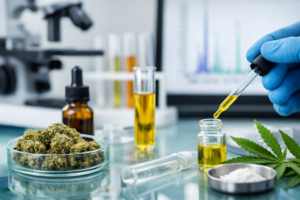

Few plant-derived compounds have experienced a transformation as remarkable as cannabidiol, more commonly known as CBD. Once confined largely to scientific research laboratories and academic discussions, CBD has evolved into one of the most recognized and commercially significant botanical compounds in the world. Today, CBD influences industries ranging from wellness and personal care to beauty, food innovation, agriculture, manufacturing, and consumer packaged goods. Its rise represents more than the growth of a single product category. It reflects a broader shift in consumer preferences, scientific exploration, agricultural development, and global entrepreneurship. Understanding how CBD reached its current position provides valuable insight into one of the most fascinating business and cultural transformations of the modern era.
The journey of CBD did not happen overnight. Its emergence as a global industry was shaped by decades of scientific discovery, evolving regulations, technological innovation, changing consumer behavior, and significant investment across multiple sectors. While the cannabis plant has been cultivated and utilized for thousands of years, the commercial significance of CBD is largely a story of the modern age. The compound’s rise demonstrates how research, market demand, and innovation can combine to create entirely new industries capable of reshaping global commerce.
The Early Scientific Discovery Of CBD
The foundation of the CBD industry was established through scientific curiosity. Researchers seeking to better understand the chemical composition of the cannabis plant identified numerous naturally occurring compounds known as cannabinoids. Among these compounds, CBD attracted attention because it exhibited characteristics distinct from THC, the cannabinoid most commonly associated with cannabis’s psychoactive effects. These early discoveries laid the groundwork for future research and provided scientists with a deeper understanding of the plant’s complexity.
For many years, however, CBD remained largely unknown outside research communities. Scientific interest continued to grow, but commercial applications remained limited. The technology required to isolate, study, and manufacture cannabinoid-based products at scale was still developing. Nevertheless, the research conducted during this period created the intellectual foundation upon which the modern CBD industry would eventually be built.
Hemp’s Return Changed Everything
One of the most important developments in the growth of CBD was the resurgence of hemp cultivation. Hemp provided an agricultural pathway capable of supporting large-scale CBD production while introducing new economic opportunities for farmers, processors, and manufacturers. As regulatory environments evolved and hemp cultivation expanded, access to raw materials increased significantly, allowing businesses to begin exploring CBD’s commercial potential.
The expansion of hemp agriculture helped establish the supply chains necessary to support a growing industry. Cultivators invested in production, processors developed extraction capabilities, and manufacturers began creating products designed for emerging consumer markets. What had once been a niche agricultural sector gradually evolved into a sophisticated ecosystem supporting businesses across multiple industries. Hemp became the bridge connecting scientific research with large-scale commercial opportunity.
Consumer Demand Created A New Marketplace
While agricultural development was essential, consumer demand ultimately accelerated CBD’s rise into the mainstream. Modern consumers increasingly sought products that reflected broader trends toward plant-based ingredients, transparency, innovation, and lifestyle-oriented purchasing decisions. CBD entered the market at a time when consumers were becoming more interested in understanding how products were sourced, manufactured, and integrated into everyday life.
This growing interest encouraged retailers and manufacturers to expand product offerings rapidly. CBD moved beyond specialty stores and entered mainstream retail environments, exposing larger audiences to cannabinoid-based products. As awareness increased, businesses invested heavily in education, branding, packaging, and product development. The market responded with remarkable speed, transforming CBD from an emerging concept into a major commercial category within a relatively short period.
The Industry Expanded Beyond Traditional Categories
One of the most fascinating aspects of CBD’s evolution is the diversity of industries it now influences. While early market growth was concentrated around oils and tinctures, innovation quickly expanded into numerous categories. Beauty companies explored CBD-infused skincare products. Personal care brands incorporated CBD into new formulations. Beverage manufacturers developed entirely new product concepts designed to appeal to changing consumer preferences.
This diversification strengthened the industry’s long-term prospects by reducing reliance on any single product category. CBD demonstrated an unusual level of adaptability, allowing businesses across multiple sectors to experiment with applications that aligned with their audiences and market strategies. As a result, the CBD economy became significantly broader than many observers initially anticipated, creating opportunities across a wide range of commercial environments.
Technology Accelerated Industry Development
Behind the growth of the CBD industry lies a significant amount of technological innovation. Advances in cultivation, extraction, purification, testing, and manufacturing have all contributed to the industry’s evolution. Modern extraction facilities utilize sophisticated technologies capable of producing highly refined cannabinoid ingredients that meet increasingly demanding quality standards. Analytical testing methods allow manufacturers to verify product consistency while supporting transparency throughout the supply chain.
Technology also continues influencing product development. New delivery systems, advanced formulations, and manufacturing innovations are helping businesses differentiate themselves within an increasingly competitive marketplace. These developments demonstrate that CBD’s growth is not solely the result of consumer demand but also of ongoing innovation occurring behind the scenes throughout the industry.
The Globalization Of The CBD Economy
What began as a relatively localized market has gradually evolved into a global economic sector. Companies now operate across multiple continents, while consumers in numerous countries have become familiar with CBD products and the broader industries supporting them. International expansion has encouraged investment, research, manufacturing growth, and increased competition, helping accelerate the maturation of the market.
As global interest continues to grow, businesses are exploring opportunities within emerging regions while adapting to diverse regulatory environments and consumer preferences. This internationalization is transforming CBD from a regional industry into a worldwide commercial ecosystem that connects agriculture, manufacturing, science, retail, and innovation on an unprecedented scale.
What The Future Holds For CBD
The future of CBD will likely be defined by the same forces that fueled its rise: research, innovation, consumer demand, and entrepreneurship. New technologies will continue shaping manufacturing processes, while evolving markets create opportunities for businesses to develop increasingly sophisticated products. Global expansion, scientific advancement, and industry maturation are expected to further influence how CBD integrates into modern consumer markets.
The story of CBD is ultimately a story of transformation. A compound once known primarily to researchers has become the foundation of a global industry that continues evolving in new and unexpected directions. Its growth illustrates how scientific discovery can intersect with agriculture, commerce, and innovation to create opportunities that extend far beyond their original scope. As the industry moves forward, CBD remains one of the most influential and closely watched sectors within the broader botanical and consumer products landscape.